The workplace continues to evolve, and as we enter 2025, technology will play an even more significant role in shaping how we work. Whether your team is in-office, hybrid, or fully remote, workplace technology is the backbone of productivity, collaboration, and employee satisfaction. At Lewcon AV, we’ve been closely monitoring the trends to ensure we’re at the forefront of delivering solutions that make work smarter, smoother, and more engaging.
Here’s a look at the emerging trends for workplace technology in 2025, tailored to the diverse needs of modern working models.
1. Smart Office Technology for In-Office Workspaces
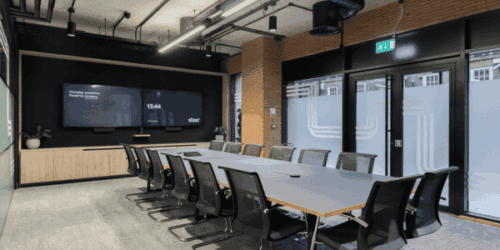
As organisations aim to attract employees back to the office, they continue to focus on creating dynamic, engaging, and smart work environments. The traditional office is transforming into a hub of innovation and collaboration, all supported by cutting-edge technology.
Key Trends for 2025:
- AI-Driven Meeting Rooms: Automated room booking systems, facial recognition for seamless check-ins, and AI tools that provide real-time transcription and translation are becoming standard. These solutions ensure that meetings are efficient and inclusive.
- Immersive Collaboration Tools: Large-format LED displays and 21:9 ultra-wide screens redefine how teams brainstorm and present ideas. The ability to annotate, share, and collaborate on a single canvas is perfect for sparking creativity.
- Sustainable Office Solutions: Sustainability is a top business priority, and technology is critical in reducing energy waste. This includes energy-efficient AV systems, smart lighting, and heating that adjusts based on room occupancy. With organisations increasingly committed to net-zero goals, sustainability is a top priority.
2. Hybrid Work: Bridging the Gap Between Office and Home
According to a recent Gartner survey, hybrid work remains the most popular model for many organisations. 76% of employees prefer this flexibility. The challenge is creating a seamless experience for employees, whether they’re in the office or working remotely.
Key Trends for 2025:
- Unified Communication Platforms: Solutions like Microsoft Teams, Zoom, and Webex are evolving into comprehensive ecosystems integrating project management, chat, video conferencing, and virtual events. Businesses are investing in technology that effortlessly brings together dispersed teams.
- Flexible Collaboration Spaces: Hot-desking and hybrid huddle rooms equipped with plug-and-play AV solutions are becoming commonplace. These spaces allow employees to quickly connect to displays and conferencing systems, making them ideal for hybrid meetings.
- Remote Monitoring and Management: IT teams leverage remote management tools to monitor and troubleshoot AV systems across multiple locations. This ensures minimal downtime and enhances the user experience for both in-office and remote workers.
3. Remote Work: Enhancing Home Office Setups
Remote work has become an established part of the workplace. In fact, 40% of global knowledge workers are predicted to work remotely full-time in 2025 (Statista). As a result, businesses are prioritising investments in remote work technology to keep employees productive and engaged.
Key Trends for 2025:
- Professional Home Office Kits: Employees will need to continue upgrading their home setups with high-quality webcams, noise-cancelling microphones, and dual monitors. Employers increasingly offer stipends or standard kits to ensure consistency and professionalism in virtual meetings.
- Cloud-Based Collaboration: Ensure cloud storage and collaboration tools like Google Workspace and Microsoft 365 are optimised for remote teams. With increased security measures and faster processing speeds, cloud solutions ensure real-time collaboration without compromising data integrity.
- Virtual and Augmented Reality: VR and AR will break into the remote work sphere, particularly for training and onboarding. These tools create immersive environments that simulate in-person interactions, fostering a stronger connection between employees and their organisations.
4. Overarching Trends Shaping Workplace Technology
Across all working models, some overarching trends are driving innovation in 2025:
- AI: Predictive analytics enable organisations to understand usage patterns and optimise their technology investments. For instance, AI tools can predict when a meeting room is likely needed or suggest the best tools for a given project.
- Cybersecurity: With hybrid and remote work expanding, businesses are doubling down on securing their networks and devices. Advanced encryption, multi-factor authentication, and secure VPNs are becoming standard.
- Employee Wellbeing Technology: From mental health apps to ergonomic tools like height-adjustable desks with smart controls, technology supports employee wellbeing. Smart monitoring tools are even used to help track workload balance and prevent burnout.
Why Workplace Technology Matters More Than Ever
The rapid pace of technological advancement is reshaping workplaces for the better, making them more inclusive, efficient, and engaging. For businesses, investing in the right technology is no longer optional—it’s essential for attracting and retaining top talent, staying competitive, and driving growth.
At Lewcon AV, we’re passionate about helping organisations navigate this evolving landscape. Whether you’re looking to create a state-of-the-art office, optimise hybrid collaboration, or empower your remote workforce, we have the expertise and solutions to make it happen.
Let’s make 2025 the year of smarter, more connected workplaces. Contact us today to learn more about how we can support your workplace transformation.
Share this blog