
For many organisations, workplace technology has evolved over time rather than through a defined strategy. New meeting rooms are added, collaboration platforms change, employees bring their own devices, and before long the workplace becomes a patchwork of systems that no longer work together.
The result isn’t always obvious. Employees adapt, IT teams work around the issues, and meetings continue, but often at the expense of productivity, collaboration and employee experience.
Employees expect workplace technology to be intuitive, reliable and consistent wherever they work. When it isn’t, businesses lose valuable time, reduce collaboration and create unnecessary frustration.
If any of the following signs sound familiar, it may be time to reassess whether your workplace technology is supporting your organisation, or holding it back.
We’ve all experienced it.
Someone can’t connect their laptop. The wrong cable is being used. The room is booked for Microsoft Teams, but someone is trying to join Zoom. The display won’t wake up, or the camera isn’t recognised.
Five minutes may not sound significant, but across dozens of meetings every week, those delays quickly become hours of lost productivity.
Modern meeting spaces should be designed so that technology disappears into the background. Joining a meeting should take seconds, not several attempts and an IT support call.
If your employees spend more time setting up meetings than contributing to them, your technology is costing more than you realise.
Every office has “that room.”
The one everyone avoids because the microphone never works, the display is unreliable, or nobody remembers how to use the controls.
When employees begin choosing meeting spaces based on which technology they trust rather than what best suits the meeting, productivity suffers.
Consistency is one of the most overlooked aspects of workplace technology. Every meeting room should provide the same simple experience, regardless of size or location. Employees shouldn’t have to relearn how to use technology every time they walk into a different room.
Reliable, standardised meeting spaces improve confidence, reduce support requests and encourage collaboration across the organisation.
Technology should enable your IT department, not consume it.
If your support team regularly receives calls about disconnected displays, failed video calls or audio issues, they’re spending valuable time solving problems that modern workplace technology can often prevent.
Today’s workplace platforms offer remote monitoring, proactive management and simplified device administration, allowing IT teams to identify potential issues before users even notice them.
Reducing reactive support doesn’t just save time, it allows IT professionals to focus on strategic projects that add real value to the business.
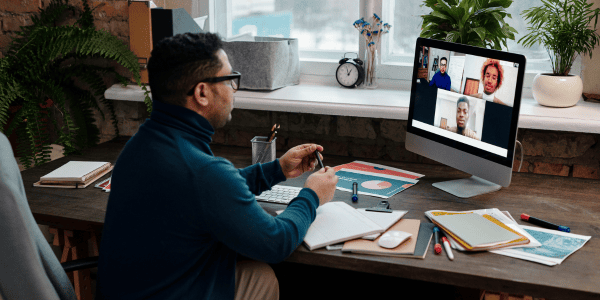
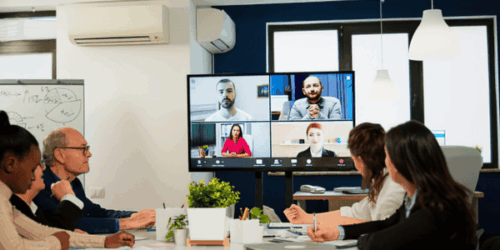
Hybrid working is here to stay, yet many organisations still struggle to create equal experiences for everyone involved.
Remote participants can’t hear conversations clearly. Cameras fail to capture everyone in the room. Content is difficult to see, and those joining remotely often feel like observers rather than active contributors.
This imbalance affects engagement, decision making and team collaboration.
Modern workplace technology focuses on meeting equity, ensuring everyone has the same opportunity to participate regardless of location. Intelligent cameras, high-quality audio and AI-enhanced collaboration tools create more natural conversations where every participant feels included.
One of the biggest warning signs isn’t technical at all, it’s behavioural.
If employees are bringing portable speakers into meeting rooms, using personal webcams, holding meetings from their desks instead of dedicated spaces, or avoiding office technology altogether, they’re telling you something important.
People naturally look for the easiest way to get their work done.
When employees create workarounds, it’s often because existing workplace technology is making collaboration harder rather than easier.
Listening to these behaviours provides valuable insight into where investment will have the greatest impact.
Many organisations make workplace decisions based on assumptions rather than evidence.
Which meeting rooms are used most often? Are collaboration spaces the right size? Are desks being utilised effectively? Are employees struggling to find available spaces?
Without workplace analytics, these questions are difficult to answer.
Smart workplace technologies now provide valuable insights into room utilisation, occupancy trends and workspace behaviour, enabling organisations to make informed decisions about office layouts, future investments and employee experience.
Data-driven workplaces are more efficient, more flexible and better prepared for future growth.
Perhaps the clearest sign of all is how employees talk about workplace technology.
If conversations frequently include comments such as “the meeting room never works,” “I’ll just use my laptop instead,” or “let’s move somewhere else,” then technology has become a barrier to collaboration.
The best workplace technology is almost invisible.
Employees shouldn’t need training every time they use a meeting room. They shouldn’t worry about compatibility or complicated controls.
They should simply walk in, start collaborating and focus on the meeting itself.
When technology becomes effortless, productivity improves, collaboration becomes more natural and employees gain confidence in the workplace around them.

The modern workplace is no longer just somewhere employees go to work. It has become a destination for collaboration, innovation and connection.
Organisations that invest in reliable, intuitive workplace technology aren’t simply upgrading equipment, they’re improving employee experience, supporting hybrid working and enabling their teams to perform at their best.
At Lewcon AV, we believe technology should simplify work, not complicate it. By designing integrated workplace solutions that are easy to use, simple to manage and built around the needs of your people, we help organisations create meeting spaces that encourage collaboration rather than frustration.
If your workplace is showing any of these seven signs, it may be time to take a fresh look at how your technology is supporting your business. Sometimes, small improvements can have a significant impact on productivity, employee satisfaction and the overall workplace experience.
For several years, the meeting room appeared to be heading for extinction. As remote working...
Read more
Workplace technology has evolved rapidly over the past few years. Hybrid working, flexible office environments,...
Read moreLewcon will work with you to develop a solution that will best suit the needs and budget of your company.
With access to all leading brands, you can rest assured that you are getting unbiased recommendations.